A tunnel oven, also called a travelling oven, is not picked from a price list. It is built to order against your product and your output target, which means the specification you give the manufacturer decides how much the oven can bake and what it costs. This guide covers the inputs that matter and how they connect, so your first conversation with a maker is a short one.
Start With Output, Not Oven Length
Work out the output you need in kilograms of baked product per hour, for the product you will make most. Everything else follows from that number, and the rest of the line has to match it.
- Mixing: the dough has to be ready when the oven needs it. Alif spiral mixers handle 30, 60 or 90 kg of flour per batch; planetary mixers handle 70 or 140 kg of dry flour.
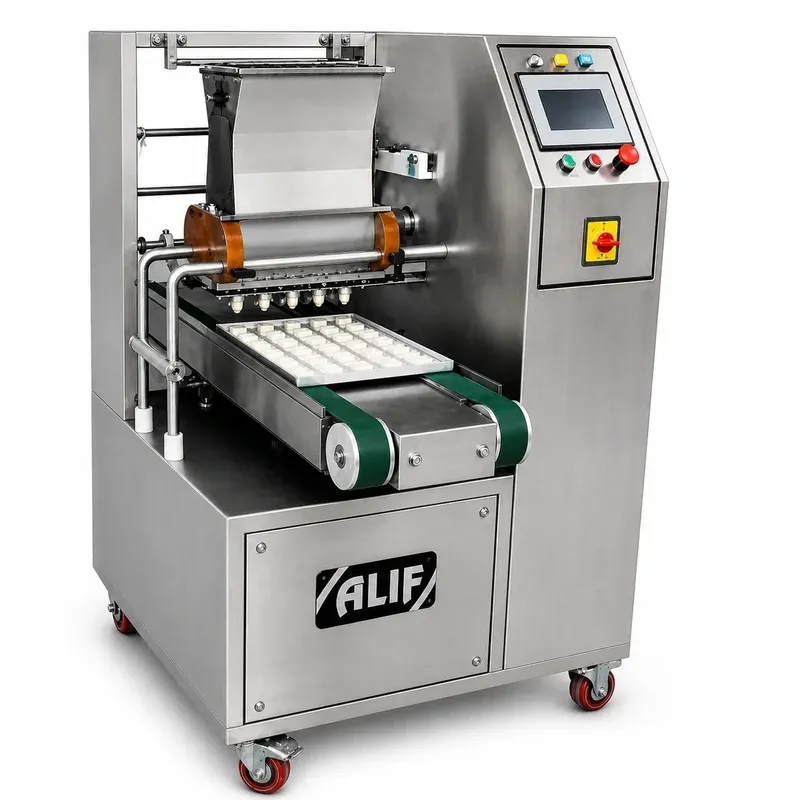
- Forming: an Alif cookie dropping machine runs up to 350 kg of cookies per hour on the largest 10 to 12 nozzle configuration.
- Packing: an ARCP-100 flow-wrapper runs up to 250 packets per minute, and the ARTP-110 and ARTP-120 toast packers run 25 to 60 packets per minute.
If any one of these runs slower than the oven, the oven waits and the line produces less than you paid for. Size the oven last, against the slowest or the largest machine you plan to run.
The Three Inputs That Set the Oven
| Input | What it controls | What to tell the maker |
|---|---|---|
| Belt width | How much product sits across the belt at one time | Product or tray width, and how many pieces you want side by side |
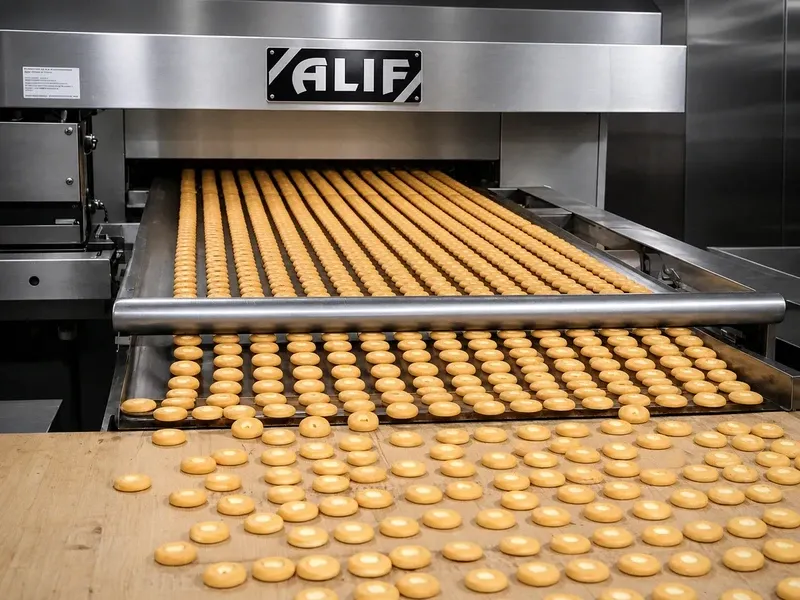
| Heated length | How long product stays in the heat at a given belt speed | Bake time from your recipe, and the belt speed you expect |
| Heating zones | How closely the oven can follow your bake profile | Whether the product needs a hot start and a gentler finish |
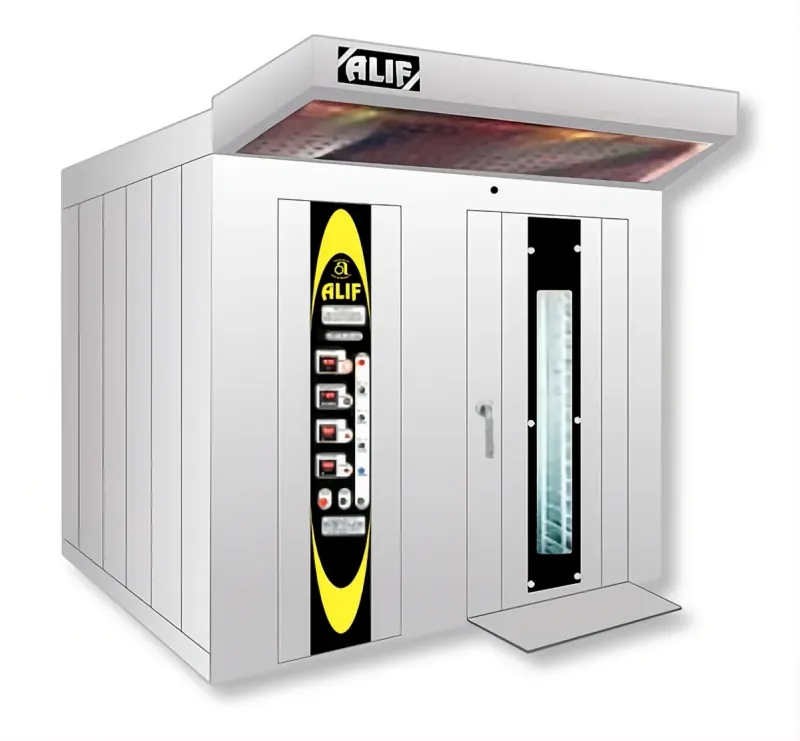
Alif tunnel ovens have multiple independently controlled heating zones, so the temperature can be set differently along the length of the belt.
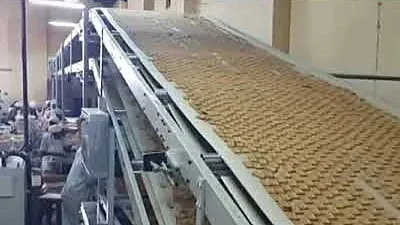
A Worked Example
The relationship between bake time, belt speed and length is simple: heated length equals bake time multiplied by belt speed. These numbers are only to show the arithmetic. They are not a quotation, and a real specification depends on your recipe and product thickness.
| Feature | Value |
|---|---|
| Bake time (illustrative) | 10 minutes |
| Belt speed (illustrative) | 2 metres per minute |
| Heated length needed | 10 × 2 = 20 metres |
Suppose you now want double the output from the same recipe. Doubling the belt speed would halve the time in the oven and under-bake the product. Output has to rise another way: a wider belt, which puts more product through at the same speed, or a longer oven, which allows a faster belt at the same bake time.
Direct or Indirect Fired
In a direct-fired oven the combustion gases pass through the baking chamber. This gives higher thermal efficiency and suits biscuits and rusk. In an indirect-fired oven a separate chamber is heated, so no combustion gas touches the product. That is preferred for bread, pastry and other delicate products, and where food safety certification rules out gas contact. Our full comparison is in Direct vs Indirect Fired Travelling Ovens.
Fuel is a separate choice: Alif tunnel ovens are built for diesel, gas, dual-fuel or electric. Pick the one that is cheapest and most reliable where the oven will stand, not the one that is cheapest to buy.
What to Send a Manufacturer
- The products and their shapes, for example round biscuits, cookies, rusk slices or toast
- Target output in kilograms of baked product per hour
- Bake time and temperature from your recipe or trials
- Fuel and power available at the site
- Floor space available for the oven, length and width
- The destination, if the oven will be exported
Send these on WhatsApp (alifovens.com/whatsapp) or to alif@alifovens.com. Alif Ovens replies with a recommendation and a written quotation, usually within 24 to 48 business hours.
Talk to our engineers
Have a question about this?
Share your products, daily output target and floor space. We'll recommend a configuration and send a quotation.